|
Dr.
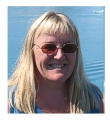
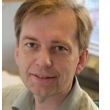
Gudrun Marteinsdóttir
is a professor of Fishery Sciences at University of Iceland. She
has coordinated many international and national research projects
on structure, reproduction and dynamics of cod and other commercially
important species (see f.ex. METACOD).
Her most recent focus has been on life history evolution and local
adaptation of cod populations and phenotypically distinct behavioral
types. CV
|
| 
|
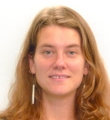
Dr.
Pamela is a post-doc at the University of Iceland and University
of Washington who currently studies how fishermen use regulations
surrounding the individual tradable quota system in Iceland to
balance multi-species catch with their quota portfolios. She also
has a background in ecology and evolutionary biology of marine
and freshwater fishes.
|
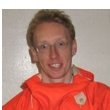 |
Dr.
Bruce McAdam is
a postdoctoral researcher at the University of Iceland
producing computer models relating to the Icelandic cod stock.
After qualifying with a PhD in computer science, he worked for
two years as a computer science lecturer before completing a masters
degree in ecology with a project on birds and windfarms. Before
moving to Iceland he then worked on the EU UNCOVER project about
managing fish stocks to promote
recovery.
|
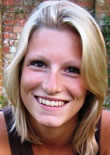 |
Dr.
Heidi Pardoe is a postdoctoral researcher at the University of
Iceland. Her research investigates the drivers of the observed
life history, behavioural and genetic variation in the Icelandic
cod stock, and tries to understand the importance of that complexity
for the persistence and sustainable management of this commercial
fish stock. Heidi's research utilises statistical, life history
and ecological models, and is a continuation of her PhD studies,
which she completed in 2009 at the University of Iceland. CV
|
|
Dr.
Gunnar
Stefánsson is a professor in statstics and the director
of the Statistical
Center at University of Iceland. He has coordinated many international
and national projects on statistical modeling of marine ecosystems
(see f.ex. GADGET). CV
|
|
Dr
Jörundur
Svavarsson is a Professor of Marine Sciences at University of
Iceland. He has coordinated many international and national projects
on ecology and taxonomy of marine invertebrates. CV |
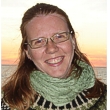 |
Dr.Marianne
Helene Rasmussen is the director of the Húsavík
Research Center at University of Iceland. The focus of this center
is to conduct research on marine mammals. She started her studies
on white-beaked dolphins in Iceland for her Master project and
continued to do her Ph.D. about the acoustic communication in
white-beaked dolphins. After finishing her PhD she has been involved
in research
projects about humpback whales, blue whales and killer whales.
|
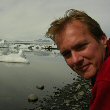 |
Dr. Kai Logemann
is a research
scientist
at the university of Iceland. After graduating in physical oceanography
at the University of Hamburg, Germany, he worked in several European
research projects as a hydrodynamic modeller of the Nordic Seas/Arctic
Ocean system. He obtained a PhD for his work on model development,
simulation and analysis of deep sea thermodynamics. After moving
to Iceland, he further developed his adaptive grid computer ocean
model which meanwhile produces multi-decadal, high-resolution simulations
of the hydrodynamics around Iceland. |
Visiting
Lecturers
|
|
Dr. Steven
Campana is
a Senior Scientist at the Bedford Institute of Oceanography, where
he has worked for the past 25 years. There he directs an active
research program on the population dynamics of sharks and other
fishes. He currently heads both the Canadian Shark Research Laboratory
and the Otolith Research Laboratory, and leads several multinational
projects on age determination, stock discrimination and the overall
status and health of shark populations.
|
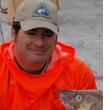 |
Dr. Timothy
Grabowski, a former research scientist at the University of Iceland,
is now Assistant Professor at Texas Tech University in Lubbock,
and Assistant Unit Leader - Fisheries at the Texas Cooperative
Fish and Wildlife Research Unit with the U.S. Geological Survey.
His research focuses on the behavioral and physiological ecology
of fishes with an emphasis on the conservation and management
of threatened and endangered species.CV
|
 |
Dr. Ed Trippel
is a Research Scientist at the St. Andrews Biological Station,
Fisheries and Oceans Canada.His long-term interest lies in fish
reproduction with the aim of incorporating its elements into improved
fisheries management advice in order to assist in rebuilding depleted
marine fishery resources of the North Atlantic. His extensive
research in the area of stock recruitment theory includes characterizing
properties of egg and sperm quality, mating behaviour and understanding
the relative roles of maternal and paternal factors and water
temperature in shaping early life history fitness traits.
|
 |
Prof. Fred W. Allendorf
is a Regents Professor at the University of Montana and a Professorial
Research Fellow at Victoria University of Wellington in New Zealand.
His primary research interests are conservation and population
genetics. He has published over 200 articles on the population
genetics and conservation of fish, amphibians, mammals, invertebrates,
and plants.
|
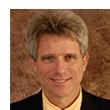 |
Dr. David
Conover is Professor at the School of Marine and Atmospheric
Sciences, Stony Brook University, USA. His research interests
involve the ecology and evolutionary biology of fishes and fisheries
science. David and his team seek to understand the adaptive significance
of reproductive, behavioral, physiological, or life history traits
in fishes and to extend this knowledge to fundamental problems
in resource management.
|
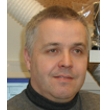 |
Dr.
Olav Sigurd Kjesbu
is principal scientist at the Institute of Marine Research, Bergen,
Norway. His main scientific interests are fish reproductive biology,
recruitment studies and related live-fish experiments. He has been
the head of several research groups, project and programs. Recently
he was the co-ordinator for RASER.
The IMR Applied Fish Reproductive Biology Laboratory is considered
to be among the most modern ones in the world within its field using
advanced histological/stereological techniques and automated image
analysis. CV |